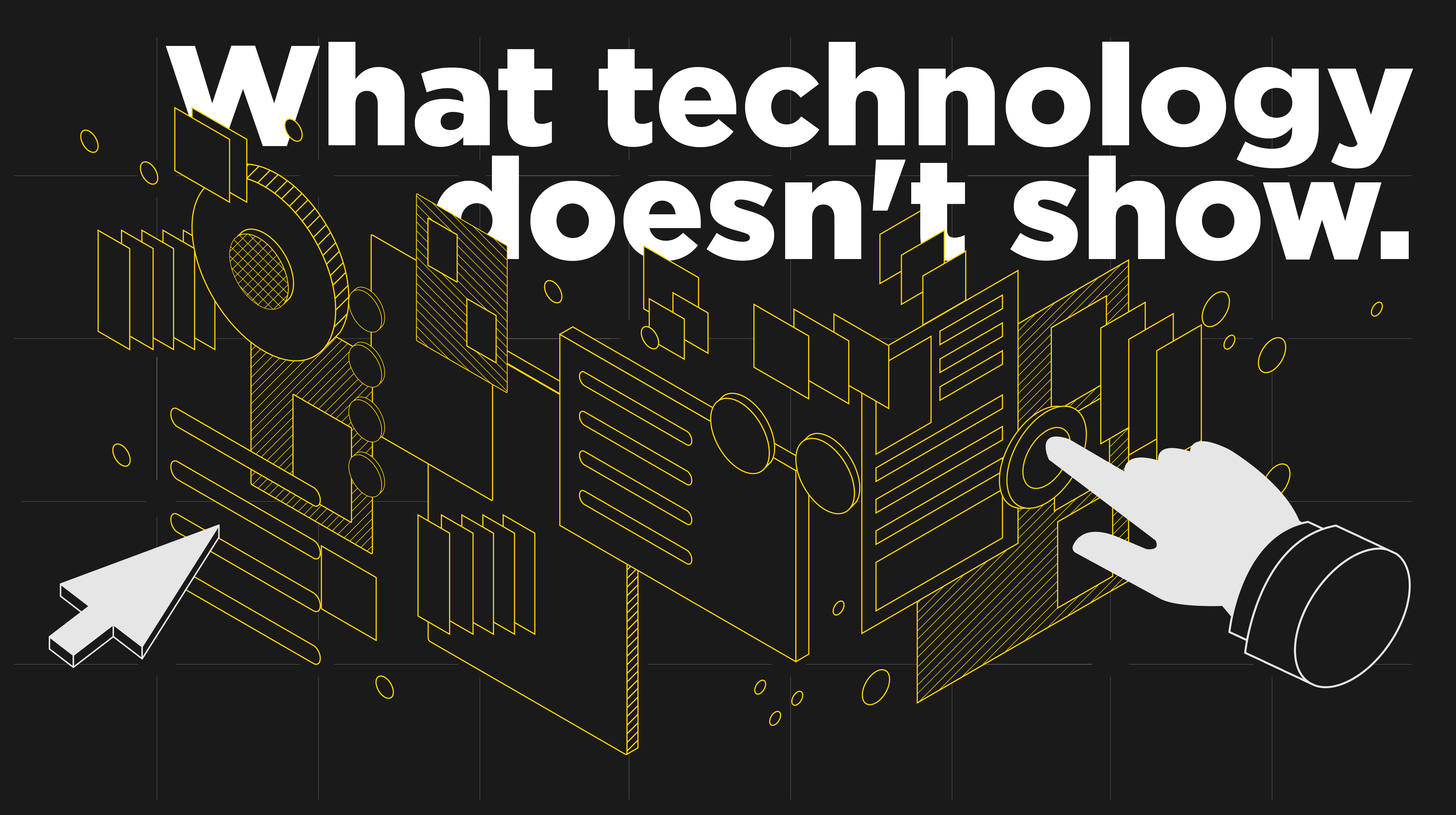
Products now interpret data, prioritize events and recommend actions behind the screen. Digital design determines whether people understand what is happening and remain in control.
A button once represented a straightforward agreement between a person and a machine. Press it, and something happened. Turn a dial, and the result changed. The interaction made the relationship between action and outcome visible. Today, much more happens in between.
Products interpret sensor data, retrieve knowledge, compare alternatives and decide which information deserves attention. The user often sees only the result. An answer appears. An alert moves to the foreground. A recommendation is made. A process continues quietly in the background.
Technology has not only become more intelligent. It has learned to hide its decisions.
The black box has moved into everyday products
This change is accelerating. In McKinsey’s 2026 global survey, nearly nine in ten respondents said their organizations regularly used AI in at least one business function. Forty-four percent said AI was already scaling across their enterprise.
Regular AI use
AI used in at least one business function.
AI at scale
AI scaling across the enterprise.
Software is no longer always waiting for a command. It is beginning to organize workflows, interpret situations and determine what people see next. But a hidden decision is not necessarily an AI decision. Any product makes decisions about what to communicate, what to prioritize and what to leave invisible.
A coffee machine decides how to translate a technical process into a simple status. A monitoring system decides which event deserves attention. A knowledge interface decides which answer and source to present. An optimization platform decides how to structure possible actions. The design question is the same:
What does someone need to understand before they can continue?
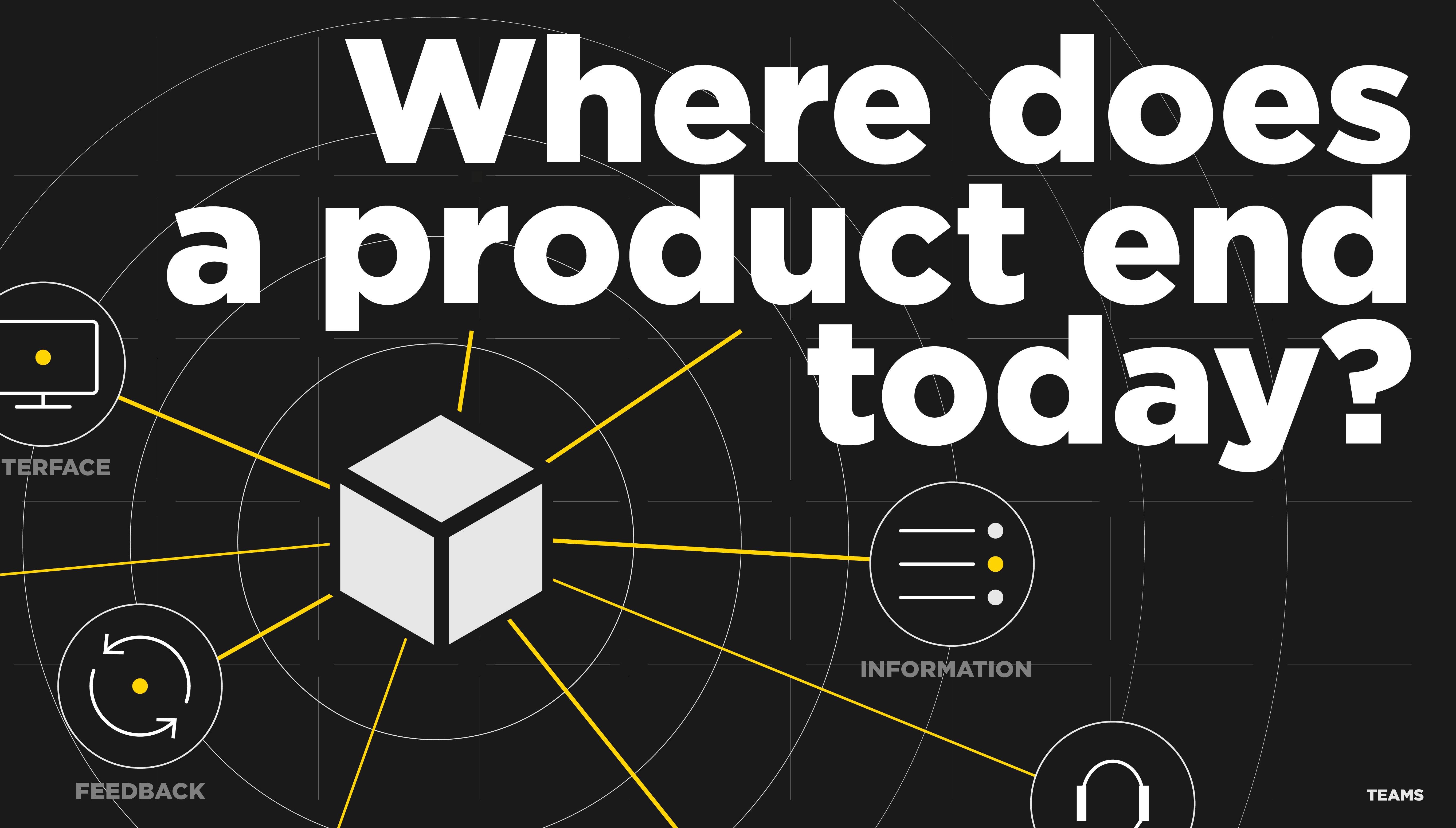
Where does a product end today?
The problem with seamless
For years, seamlessness was treated as the ideal of digital experience. Fewer steps. Less friction. More automation.
But removing every moment of friction can also remove the moments in which people stop, assess and make a deliberate decision.
Research into AI-supported decision-making illustrates this tension. In an experiment with 199 participants, interfaces that required people to engage more actively with an AI recommendation reduced overreliance. Yet participants liked these interventions less than the more effortless alternatives.
Convenience and good judgment do not always point in the same direction.
The goal of digital design should therefore not be to make every interaction effortless. It should be to make the right actions easy and the consequential actions considered.
Transparency is a design decision
Making technology understandable does not mean exposing every calculation, data point or technical process.
More information can create more confusion.
NIST distinguishes between three layers: transparency helps people understand what happened, explainability addresses how a decision was reached, and interpretability helps clarify why it matters in the user’s context.
The OECD makes a similar point. Explanations should be clear, simple and appropriate to the context and audience. Full access to code, datasets or technical logic may add complexity without helping someone understand the outcome.
The interface must decide which layer is needed in that moment:
- What is happening?
- Why is this being shown?
- Where does the information come from?
- How certain is the system?
- What can the user do next?
- Can the decision be questioned or changed?
Four decisions that should not disappear
Severin
What is happening?
The Halo translates the coffee machine’s internal process into a state that can be understood at a glance. Users do not need the technical detail. They need to know that the machine understood them and that preparation is progressing.
Interface type: Experience interface
Value: Orientation without interruption

Körber K.Ai
Where does this answer come from?
Körber K.AI brings PAS-X knowledge into the regulated workflow. Answers are supported by relevant documents, links and previews, allowing users to examine the material behind the response.
Interface type: Virtual companion
Value: Knowledge without leaving the task
Velocity AI Studio
Which option should we pursue?
The Halo translates the coffee machine’s internal process into a state that can be understood at a glance. Users do not need the technical detail. They need to know that the machine understood them and that preparation is progressing.
Interface type: Experience interface
Value: Orientation without interruption
Dräger INARA
What requires attention now?
INARA brings live video, workplace states, alarms and communication into one operational view. Its interface determines what should move forward and what can remain in the background, allowing operators to monitor several workplaces without treating every signal as equally urgent.
Research from clinical decision-support systems shows why this prioritization matters. Interruptive alerts were accepted least often, while tailoring alerts to the user’s role appeared more effective. The lesson extends beyond healthcare: an alert is only useful if it reaches the right person with the right relevance.
Interface type: Physical-digital interface
Value: Faster recognition and response

Real-time.
One digital logic across the ecosystem
These decisions cannot be redesigned independently for every product, market and touchpoint.
People need recurring principles for states, warnings, recommendations and possible actions. Development teams need shared components and behaviors that can be reused without making every interface identical.
A design system therefore does more than create visual consistency. It establishes how the organization communicates certainty, urgency, progress and control.
Intro florian article:
XXX European regulation is beginning to formalize part of this responsibility. Since August 2026, certain AI systems must clearly communicate when people are interacting with AI.
But a label alone does not create understanding. People still need to know what the system is doing, which information matters and when human judgment is required.

The interface is where responsibility becomes visible
European regulation is beginning to formalize part of this responsibility. Since August 2026, certain AI systems must clearly communicate when people are interacting with AI.
But a label alone does not create understanding. People still need to know what the system is doing, which information matters and when human judgment is required.
This is where digital design creates value. It reduces hesitation without removing judgment. It makes knowledge accessible without hiding its source. It structures complex options without pretending there is only one possible answer. It brings important events forward without turning every signal into an alarm.