
What happens when the lens becomes the interface for the people creating the image? ZEISS Horizon Anamorphic integrates motorized control, lens data and digital interaction into the lens.
The bigger
picture
€11.9 bn turnover and 46,600+ employees worldwide.
3 Academy
Awards
Honoring breakthroughs in cinema optics.
Next comes
first
The ZEISS Group consistently reinvests 15% of its total revenue in R&D.
The set won’t wait.
Film sets run on fast decisions, precise tools and well-rehearsed routines. Cinematographers, focus pullers and camera assistants work around the same lens from different positions, each relying on specific information at different moments.
With Horizon Anamorphic, motorized control and digital feedback become part of the lens itself, shortening setup and adjustment workflows where every minute on set has a direct financial impact.
Our challenge was to integrate these new capabilities into established routines so naturally that crews could use them immediately, from preparation through shooting.
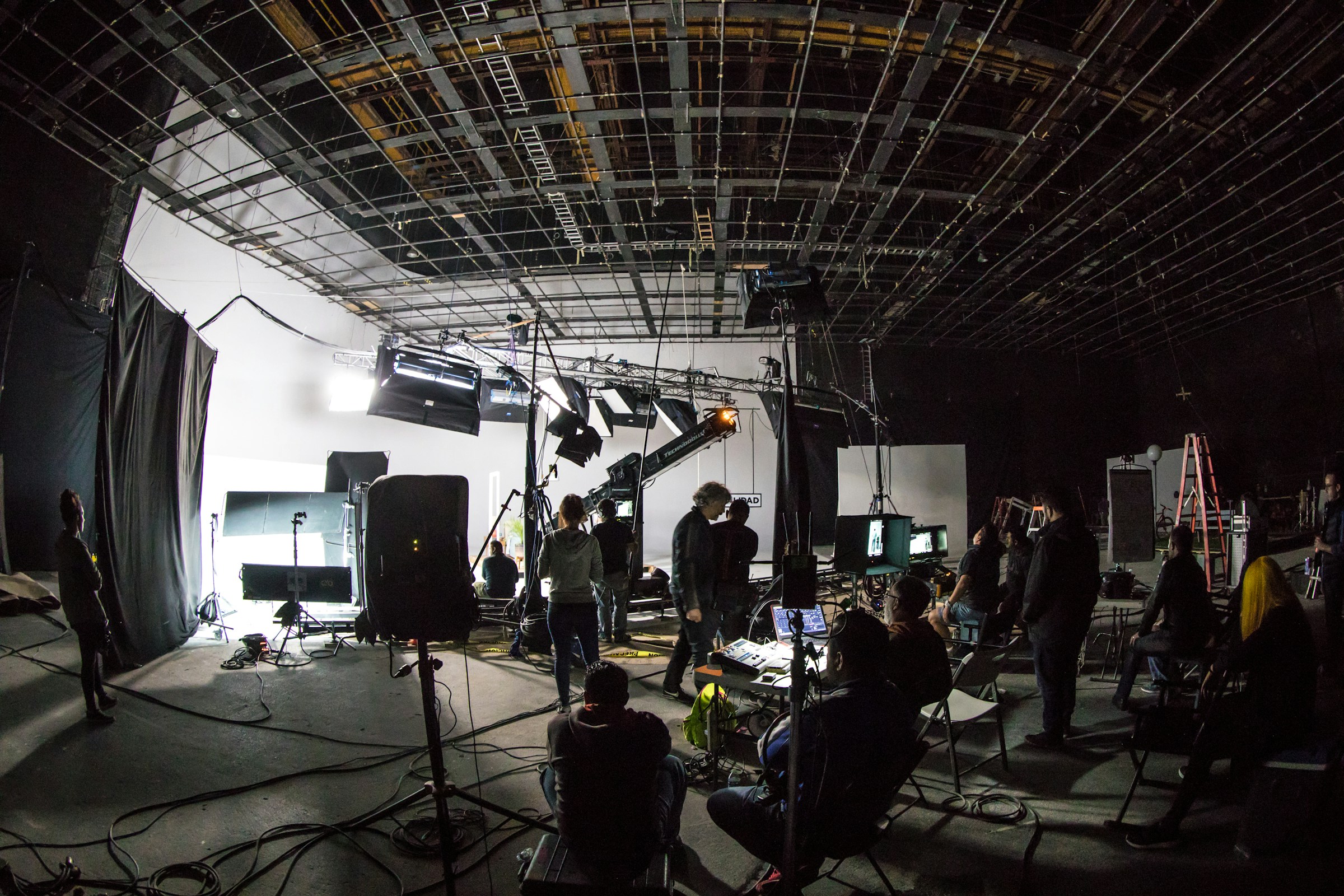
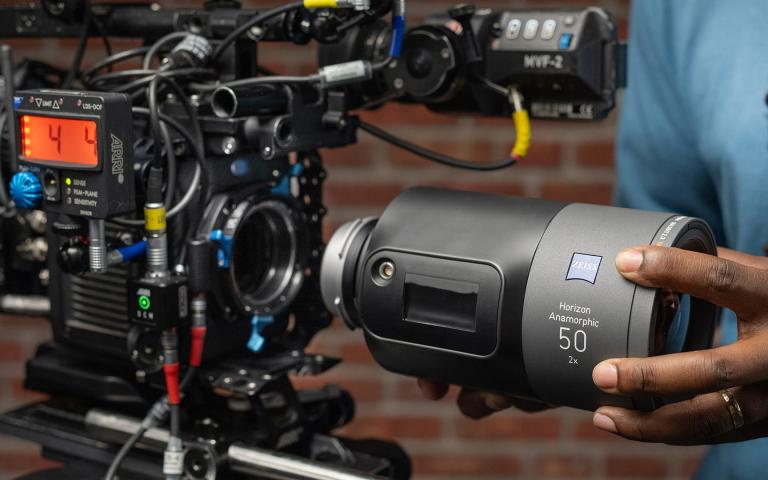
Three roles. One barrel.
The lens barrel is where these workflows meet.
Cinematographers assess iris settings. Focus pullers rely on precise distance and focus information. Camera assistants prepare, check and verify the setup from the same physical reference point.
We used different viewing positions, responsibilities and hand movements to structure the operating concept around the lens.
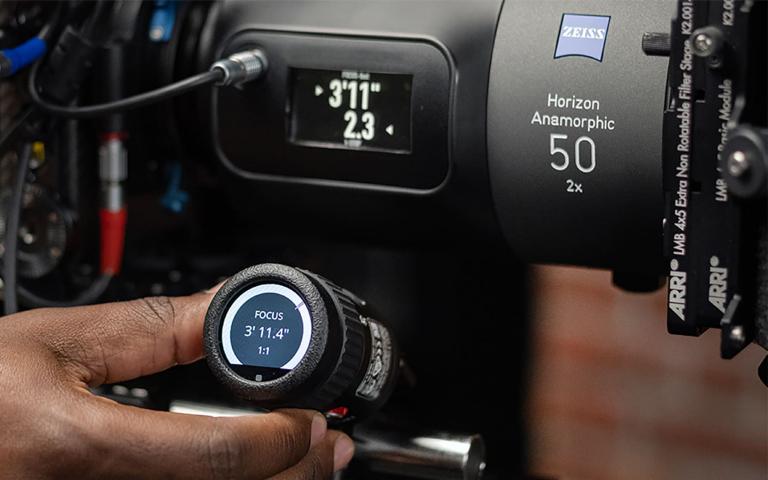
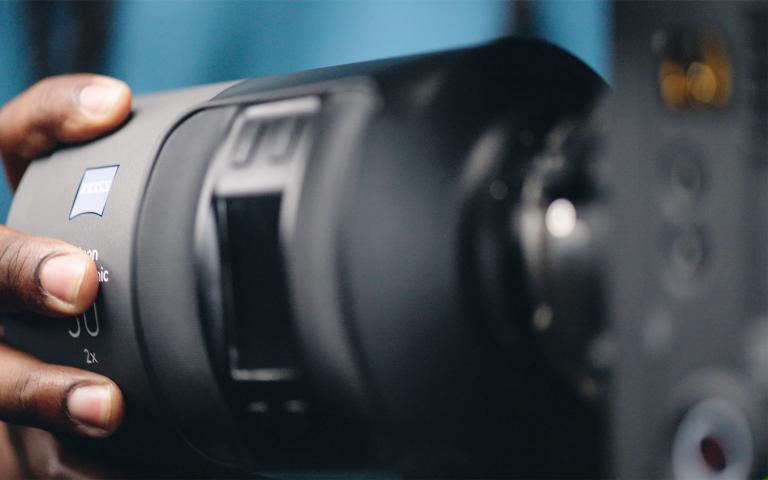
Control moves in.
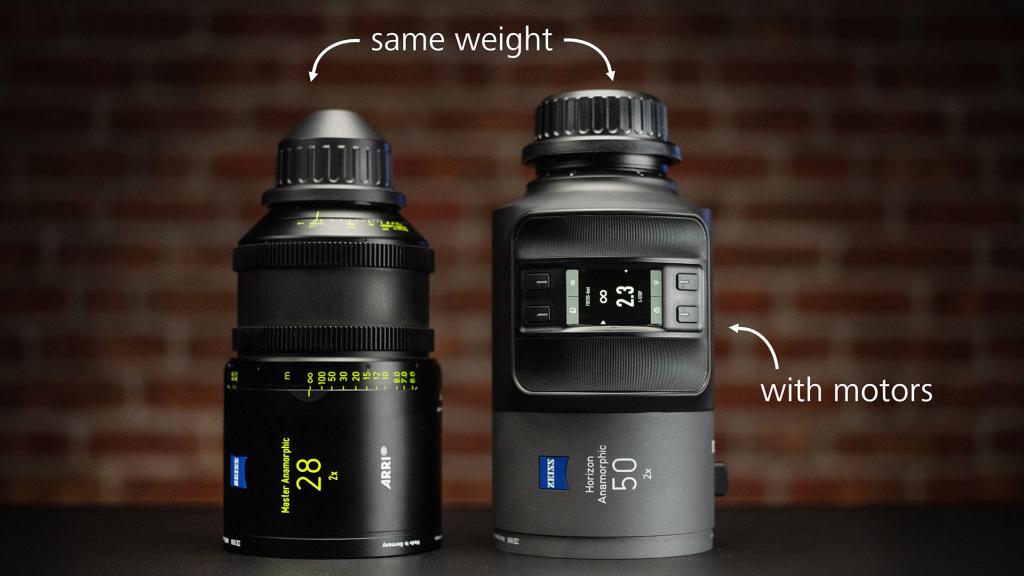
Horizon Anamorphic brings focus and iris motors, lens data, displays and direct controls into one integrated lens platform.
Our task was to turn that technical integration into a coherent product experience. We connected physical product design, motorized control and digital information so that each function sits where crews expect to find it and remains accessible within established workflows.
Compatibility with existing lens control systems keeps familiar hand units and operating routines in play, while essential controls and information become available directly at the lens.
Traditional lens operation is built around circular movement. We used this familiar behavior as the starting point for digital interaction.
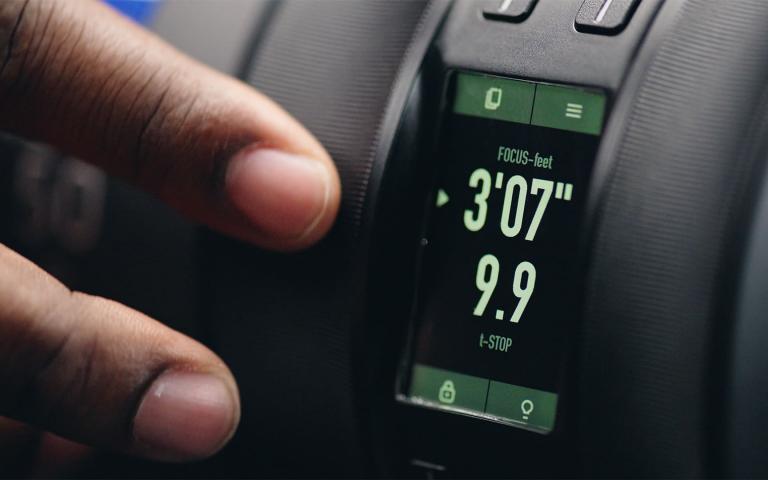
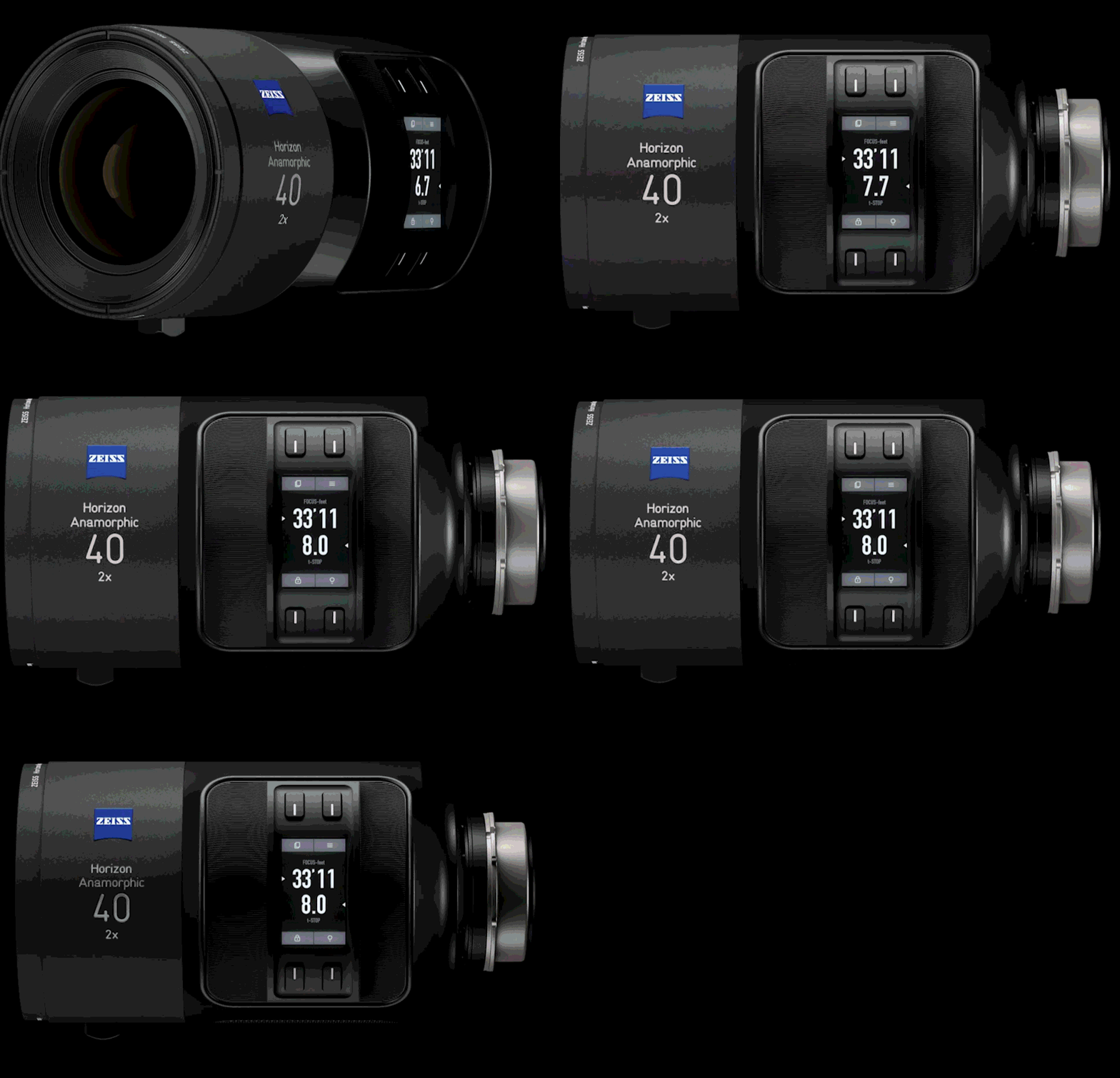
We explored buttons, levers, wheels and touch surfaces to understand how motorized control could feel as immediate as manual lens handling. The selected direction translates this circular logic into touch interaction directly on the barrel.
Touch controls provide access to focus and iris functions, while a second display makes relevant information visible from the focus puller’s working position. We structured display states around preparation, setup and shooting, including iris, focus distance, depth of field and active lens data.