Logic made human.
Complex machine output becomes insight users can understand, evaluate, and act on.
Complex machine output becomes insight users can understand, evaluate, and act on.
A shared product vision aligns different user groups and supports the needs of each role.
A modular design system gives every future feature a reusable foundation.
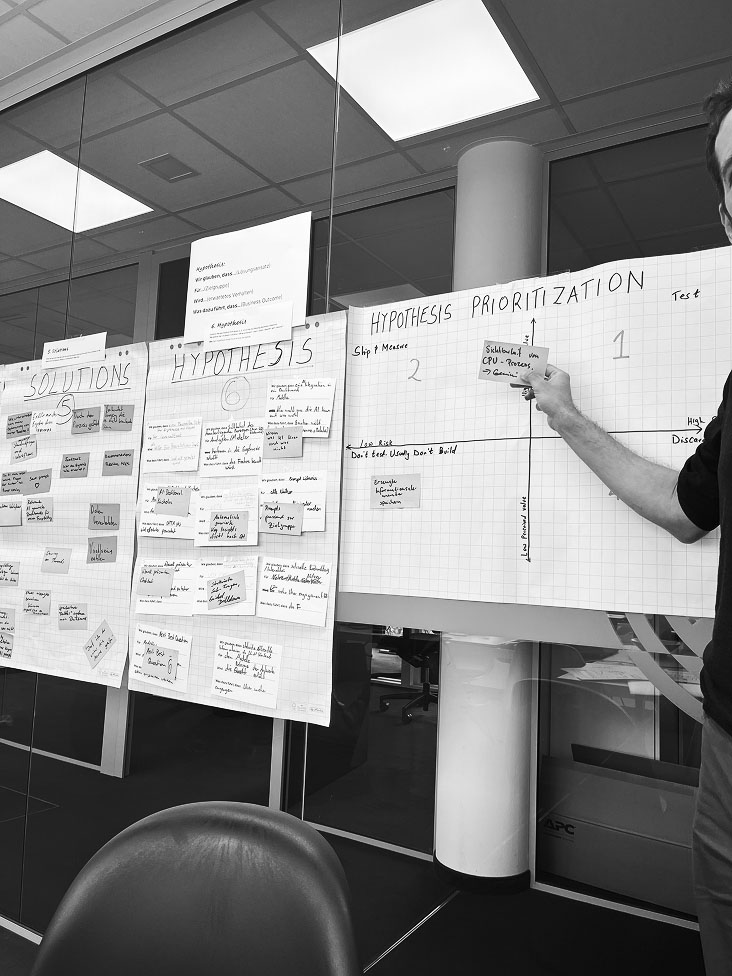
Lean UX turns research, testing, and iteration into a continuous model for product development.
AI supports interpretation by revealing relationships and guiding users to the next relevant question.
Optimization software can evaluate relationships no person could process alone. The final decision, however, still belongs to people.
Analysts, consultants, and decision-makers need more than an output. They need to compare scenarios, inspect assumptions, follow dependencies, and explain why one option should take precedence over another.
The central question was how to make its logic accessible without removing the depth experts rely on.
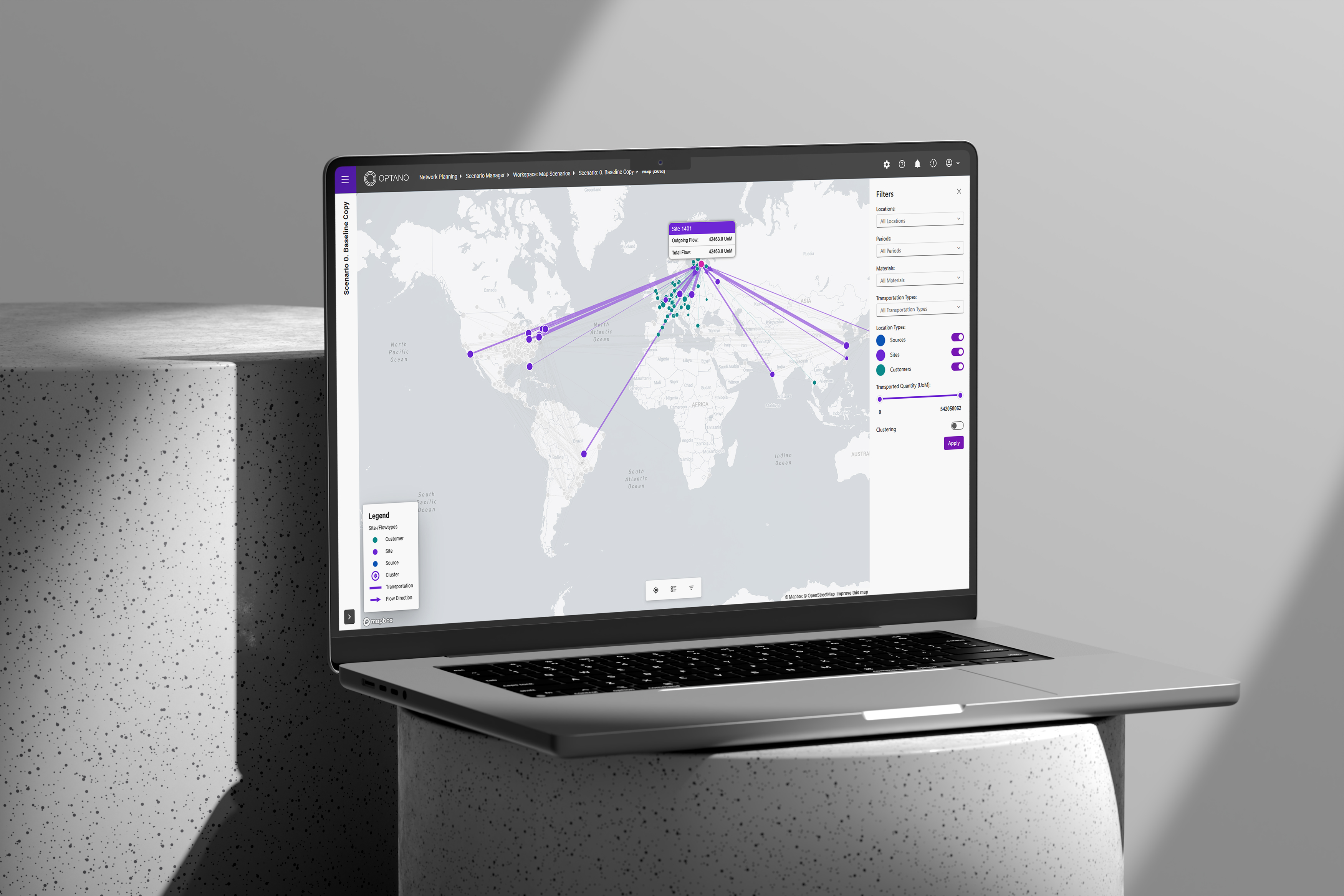
The interface maps the sequence of a decision. High-level outcomes lead into scenarios, cost drivers, network effects, and detailed data.
Users compare alternatives, trace changes, and inspect the relationships behind each result. Every step connects the outcome to its assumptions and operational consequences.
This visible reasoning path gives teams a shared basis for review, explanation, and action.
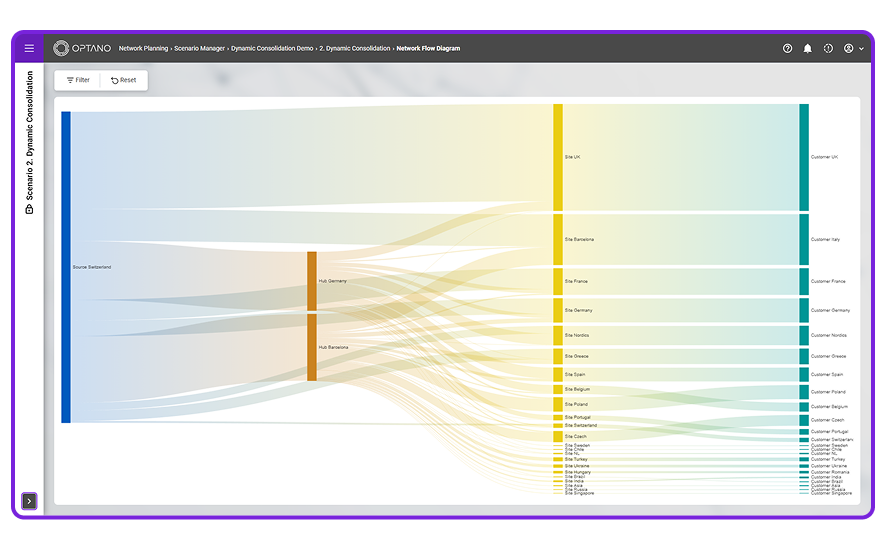
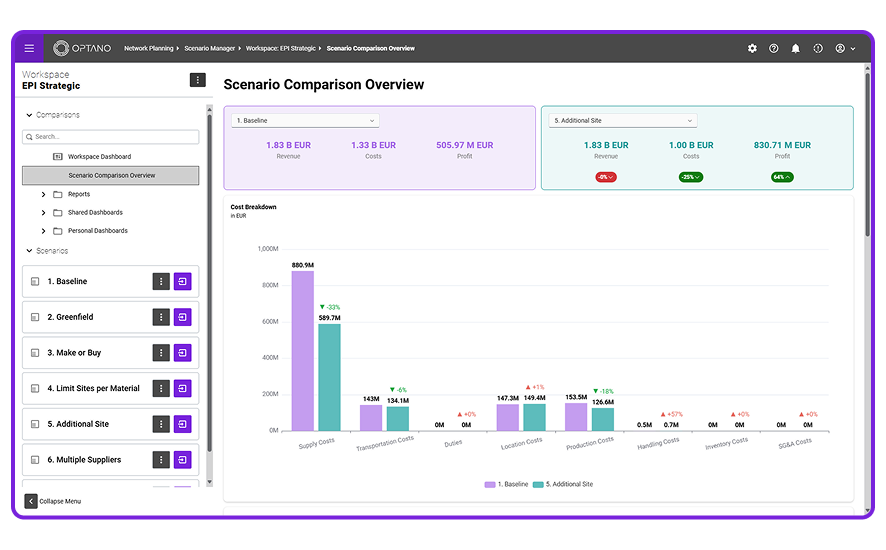
OPTANO users work deep within complex systems, evaluating scenarios, comparing alternatives, tracing dependencies, and assessing the operational impact of different decisions.
Their work depends on receiving the right information at the right moment.
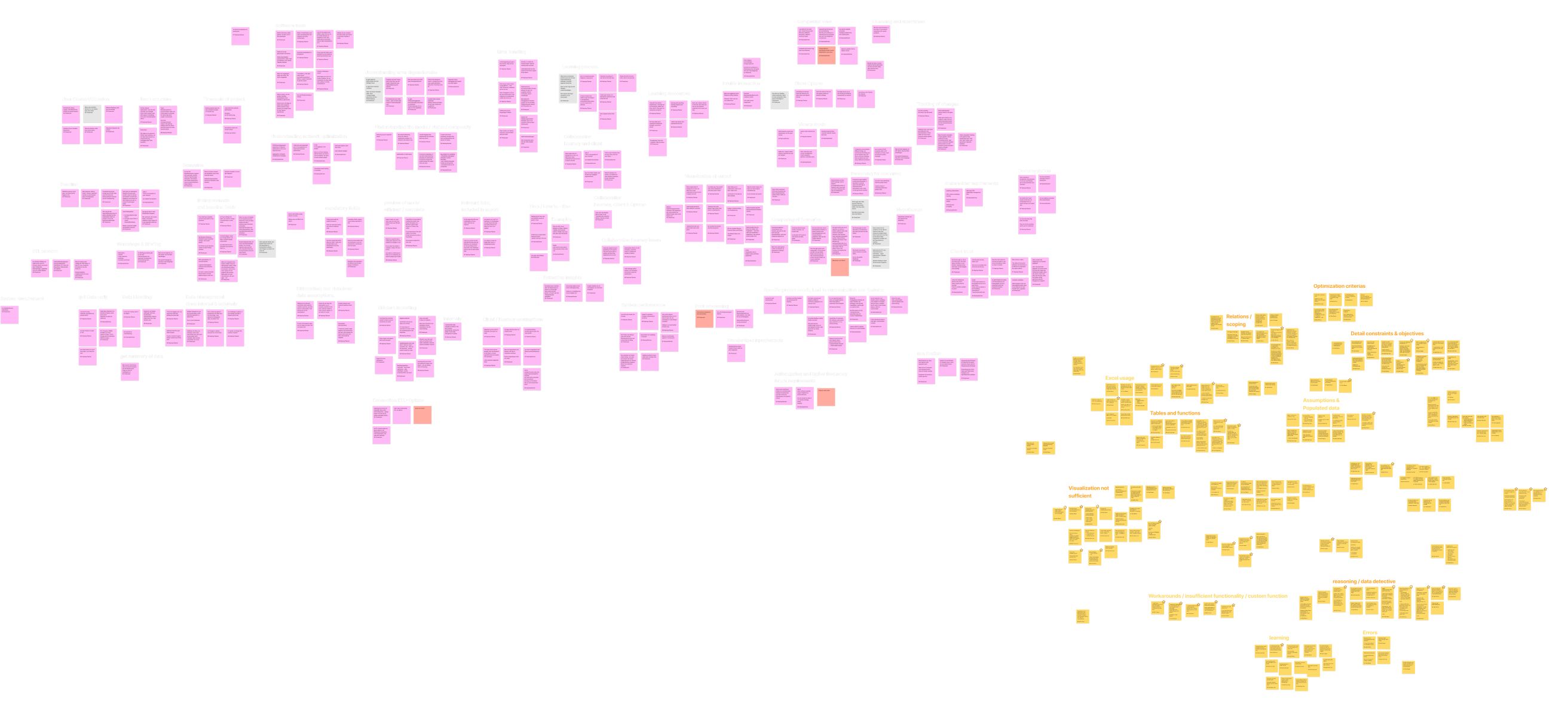
Through interviews, journey mapping, and workflow analysis, we identified where navigation and information structures were consuming valuable attention.
The product vision reorganizes the journey around expert decision-making: from overview to evidence, from comparison to detail, and from result to action.